Most pest control companies adding wildlife service in the same way they price general pest service: a base rate, maybe a callout fee, and an hourly add-on if things get complicated. That model loses money on wildlife work because the variability of the job is much higher, and the customer expectations are different. The companies that price wildlife correctly are the ones who treat each job as a project, present multiple options to the customer, and build in the real costs (specialized labor, insurance, materials) from the start.
This guide is a regional pricing reference for pest control companies who want to add wildlife services or sharpen their existing pricing. It covers the pricing models that actually work, the regional and species-specific factors that drive cost, the operational and insurance overhead you need to bake in, and the conversation that turns a price-shopping call into a closed project. Plenty of agencies will tell you to "just charge more." This is the pricing math that lets you do that without losing customers.

Written By: Adam Bennett | May 29, 2026
Adam is the president and founder of Cube Creative Design and specializes in private school marketing. Since starting the business in 2005, he has created individual relationships with clients in Western North Carolina and across the United States. He places great value on the needs, expectations, and goals of the client.
You can post three times a week, run a small ad budget, and still pull almost zero leads from Facebook or Instagram. The reason is usually not your content. It is your setup. Most accounts I audit for pest control companies were built fast: wrong account type, missing business info, no Meta Business Suite connection, broken or absent CTA button. Every one of those gaps quietly bleeds leads. HubSpot's ROI research found that businesses using integrated marketing and sales platforms generate 129% more leads and close 36% more deals after 12 months compared to those using disconnected tools. And in 2026, an incomplete profile does not just hurt your reach on Meta. It can get you excluded from AI search results entirely.

Written By: Hannah Kilpatrick | May 28, 2026
Hannah Kilpatrick Cube Creative DesignHannah Kilpatrick graduated from Western Carolina University in 2021 with a Bachelor of Science in Communication with a Minor in Marketing and a Concentration in Public Relations. She has been around social media since its creation. (Meaning, she was in the first grade when Facebook became available to the general public.) As our very own professional Gen-Z, Hannah is a whiz when it comes to social media creation and paid advertising.
A homeowner in your service area opens her laptop because she just found droppings under the kitchen sink. She types "pest control near me," clicks the top three local results, and starts comparing. On the first site, a smiling man in a pristine blue uniform shakes hands with a homeowner outside a generic suburban front door. On the second, a different smiling man in a different pristine blue uniform shakes hands with a different generic homeowner. On the third, the same smiling man from the first site appears again. She closes all three tabs and texts a friend for a referral instead.
That moment is where a stock photo costs a pest control company a lead, and it happens on independent pest control websites every day. The 2026 State of Pest Control Marketing Report from Scorpion put a number to what most owners already suspected: a meaningful share of homeowners say generic stock photography on a pest control website is enough to disqualify a company before the first call.
If your pest control website still leans on a smiling model in a clean uniform, a magnifying glass over a cartoon bug, or a generic suburban house that looks nothing like the homes you actually service, your photos are working against you. We work with independent pest control companies every week, who are surprised by how much their imagery is dragging down their conversion rate. The fix is not complicated. It does, however, require throwing out the stock library and building a real one.
This post covers why homeowners can tell, which stock photo tropes do the most damage, what to photograph instead, and how to handle the work without blowing the marketing budget.

Written By: Chad J. Treadway | May 27, 2026
Chad is a Partner and our Chief Smarketing Officer. He will help you survey your small business needs, educating you on your options before suggesting any solution. Chad is passionate about rural marketing in the United States and North Carolina. He also has several certifications through HubSpot to better assist you with your internet and inbound marketing.
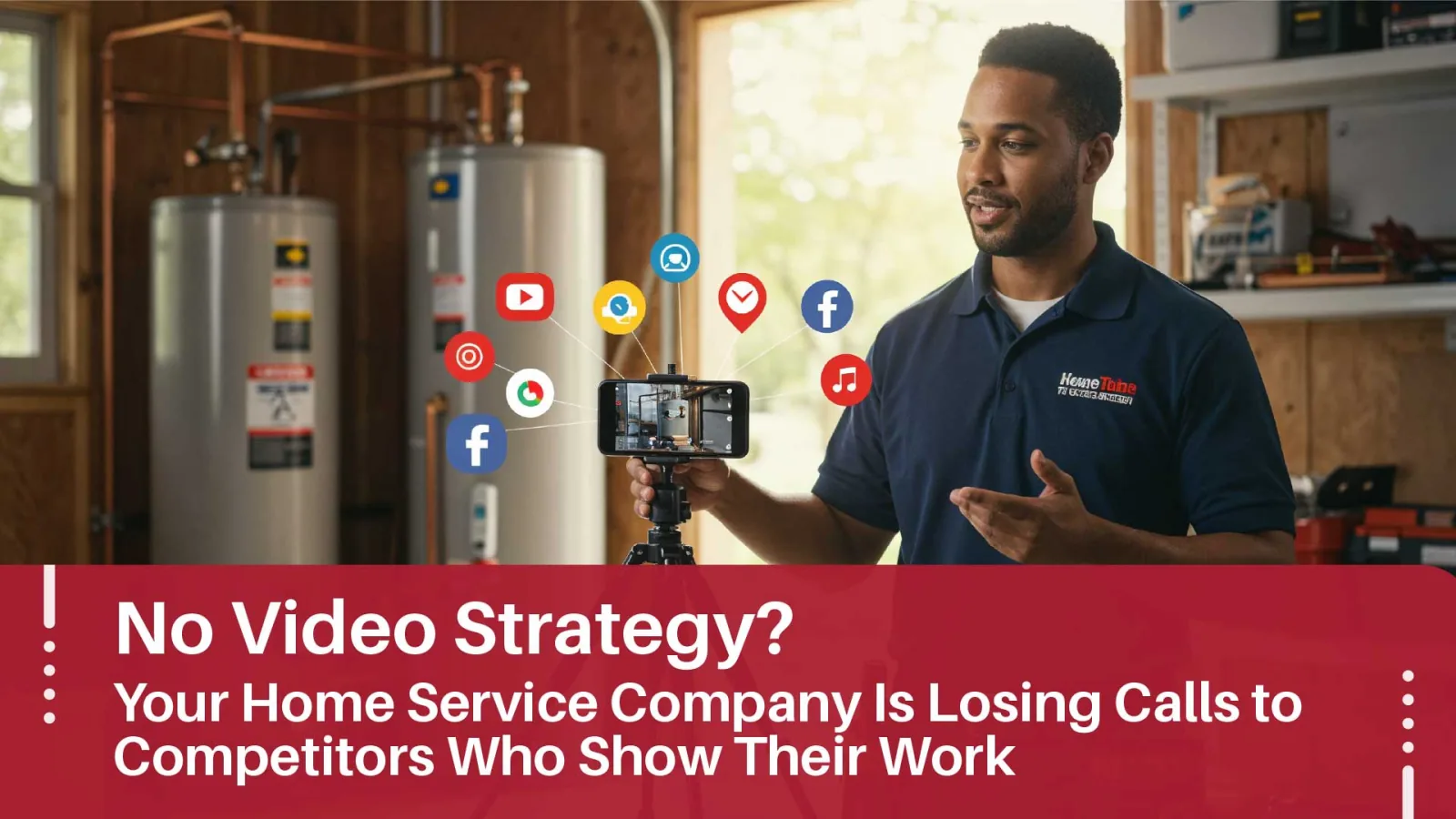
Here is a question every home service business owner should ask themselves: When was the last time you watched a video to learn how to do something? Yesterday? This morning? Your customers are doing the same thing; they just happen to be watching videos about plumbing problems, HVAC installations, and roof repairs.
Video is not optional anymore. It is how homeowners research, evaluate, and choose service companies. And the best part? You do not need a film crew. You need a phone, a willingness to show your work, and about 60 seconds of your time.
This post covers exactly how home service businesses can use video across the three platforms that matter most: YouTube, Google Business Profile, and social media. No theory. No expensive production advice. Just practical steps you can start this week while your crews are already out on job sites.
Written By: Chad J. Treadway | May 26, 2026
Chad is a Partner and our Chief Smarketing Officer. He will help you survey your small business needs, educating you on your options before suggesting any solution. Chad is passionate about rural marketing in the United States and North Carolina. He also has several certifications through HubSpot to better assist you with your internet and inbound marketing.